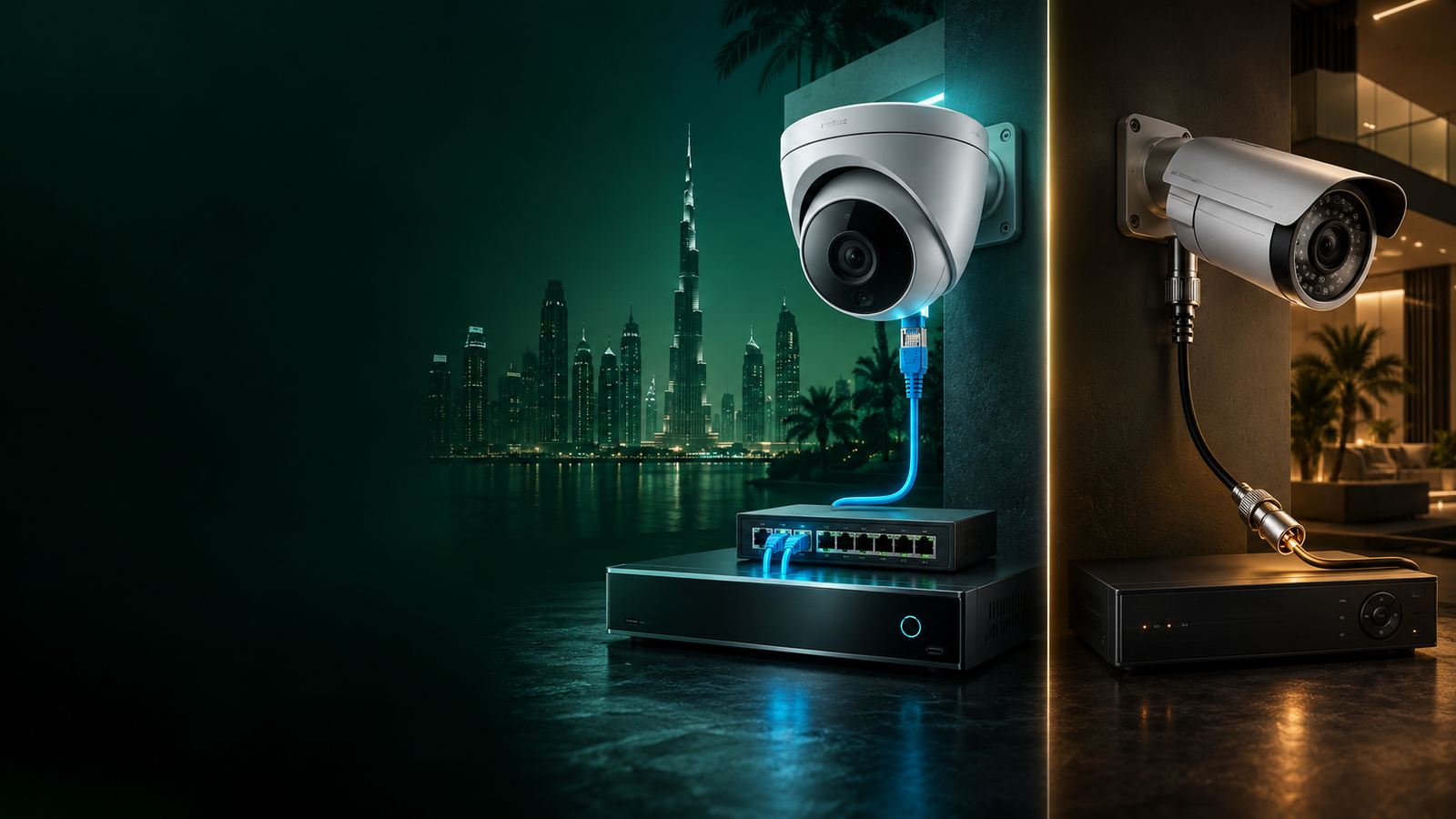
Choosing between IP vs analog CCTV comes down to three things: image quality, cabling, and budget. Both are still sold and installed across Dubai — neither is obsolete — so the right choice depends on the property, not which one sounds newer.
IP vs analog CCTV: what's the difference
Analog cameras send footage over coaxial cable to a DVR, which does the video processing. IP cameras process video on the camera itself and send digital data — often over the same cable that also powers them (PoE) — to an NVR. That's the core distinction: where the processing happens.
Image quality
IP cameras generally offer sharper resolution — 4MP and 5MP IP cameras are common, while analog tops out lower before the picture starts to suffer. If you need to read a number plate or a face clearly at distance, IP has the edge.
Cabling & installation
Analog systems are often cheaper and faster to install where coaxial cabling already exists — useful for upgrading an older property without a full rewire. IP systems typically use Cat6 cabling with Power over Ethernet, which is cleaner for new installs but means new cabling if none exists yet.
Cost comparison
Analog kits are usually the lower-cost entry point, which is why they remain popular for straightforward villa setups. IP systems cost more per camera but scale better for larger properties needing higher resolution or advanced features like motion zones. See real numbers in our CCTV installation cost guide.
Night vision and outdoor performance
Both systems can handle night vision, but the gap widens with camera quality rather than the IP-vs-analog split itself. A mid-range IP camera with proper infrared range will generally outperform a budget analog unit in a dark driveway or warehouse yard — not because it's IP, but because IP cameras at that price point tend to pack better sensors. If night coverage matters more than anything else, put your budget into the camera sensor before worrying about the underlying system type.
Which do most Dubai properties use
In practice, both are common across Dubai. Established villas with existing coaxial wiring often stay analog or go hybrid when upgrading, since the cabling is already run. Newer builds and commercial fit-outs increasingly default to IP, since Cat6 cabling is often installed during construction anyway and the resolution ceiling matters more for compliance and detail. There's no universal right answer — it comes down to what's already in the walls and what the property actually needs to capture.
Which should you choose
If you're upgrading an existing analog system with usable cabling, staying analog (or going hybrid) often makes sense. For a new install, especially commercial, IP is generally the better long-term choice for image quality and flexibility. Not sure which fits your property? Book a free site survey and we'll tell you honestly, or visit the showroom to see both side by side.
What about hybrid systems
Hybrid recorders that accept both analog and IP cameras on the same system exist specifically for properties mid-upgrade — you can add IP cameras to new areas while keeping existing analog cameras running on old cabling, rather than replacing everything at once. It's a practical middle ground if budget or timing doesn't allow a full system swap in one go.